Recycling and Sustainability for Tree Surgeons Docklands
 At Tree Surgeons Docklands, sustainability is built into every stage of our work, from site setup to the final clearance of timber, brash, and green waste. As an eco-conscious tree surgery service in Docklands, we focus on reducing landfill use, reusing materials wherever possible, and supporting a cleaner local environment for homes, businesses, and managed landscapes. Our approach is shaped by the area itself: Docklands is a busy, mixed-use part of East and South East London, where responsible waste handling and careful separation are increasingly important to borough recycling targets and local environmental priorities.
We aim to recycle at least 85% of suitable green waste generated by our operations, with a long-term target of 90%+ as more processing routes and end uses become available. That means wood chip, branches, foliage, stump grindings, and untreated timber are separated for recycling or recovery rather than being treated as general waste. Wherever practical, material is sorted on site before being moved to approved facilities, helping us keep contamination low and maximise the amount that can be repurposed.
For tree surgery in Docklands, recycling is not just a single action but a sequence of careful steps. Branch wood may be chipped for mulch or biomass; clean logs can be re-used as timber or habitat material; and nutrient-rich green arisings are directed into composting or soil improvement streams where appropriate. This aligns with the wider borough approach to waste separation across East London, where mixed recycling, garden waste, and residual waste are increasingly handled through distinct collection and processing pathways.
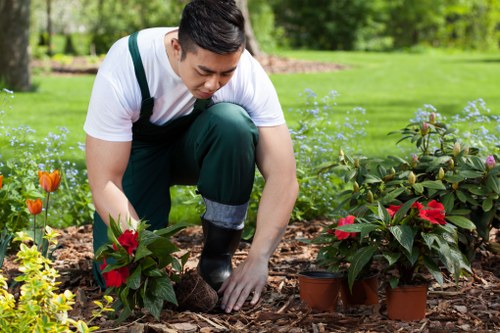 A key part of our sustainability work is using local transfer stations and authorised recycling facilities to keep transport distances sensible and emissions lower. By working with nearby sites in and around Tower Hamlets, Newham, and neighbouring boroughs, we can direct waste to locations that specialise in wood recovery, green composting, and inert material handling. These transfer stations help bridge the gap between the work site and the final recycling destination, ensuring that recyclable arboricultural waste is received, weighed, and sorted in a controlled and traceable way.
We also pay attention to the local context in Docklands, where developments, riverside spaces, business districts, and residential estates often have different waste requirements. On commercial sites, for example, timber offcuts, pallets, and plant matter may be separated into dedicated streams, while on estate-based maintenance projects, the emphasis may be on keeping green waste distinct from mixed rubbish. This kind of separation supports borough-led recycling systems and helps reduce the amount of material sent for disposal.
Our tree surgeons also look for opportunities to reuse before recycling. Suitable timber can be set aside for habitat logs, eco-mulch, edging, or local landscaping uses, subject to site conditions and permissions. In some cases, wood chip can be supplied for ground cover that helps suppress weeds and retain soil moisture, giving a second life to material that would otherwise be processed again. This practical, circular approach keeps the sustainability benefits close to the communities we serve.
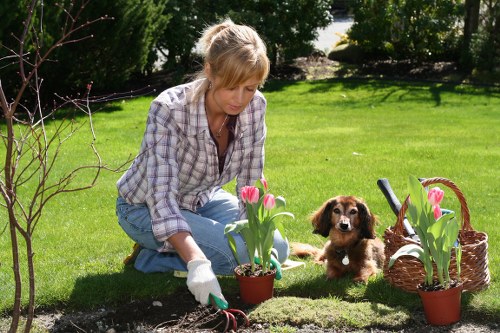 Partnerships with charities are another important part of our recycling and sustainability commitments. Where safe, legal, and appropriate, we work with community organisations and environmental charities that can use reclaimed wood, wood chip, or timber offcuts for habitat creation, community planting projects, and conservation initiatives. Supporting charities in this way helps extend the value of arboricultural materials beyond the job site and contributes to greener public spaces and local biodiversity efforts.
We are especially mindful of the fact that many London boroughs place strong emphasis on waste separation at source. That means ensuring wood waste is not mixed with plastics, metals, or contaminated rubble, because contamination can reduce the recyclability of the entire load. Our crews are trained to identify and sort common waste types associated with tree surgery, including clean wood, diseased material, leaves, soil, and hard landscaping debris, so each stream can be handled in the most sustainable way available.
In practice, this means more of what we remove from a site in Docklands can be recovered and less is lost to landfill. It also means our clients benefit from a more efficient, lower-impact service that reflects modern expectations for environmental responsibility. Whether we are working on small pruning jobs or larger clearance projects, we treat recycling as an essential operational standard rather than an optional extra.
 Transport is another area where we have made meaningful changes. Our low-carbon vans are selected to reduce fuel use and cut local emissions, helping us keep our carbon footprint lower while travelling between Docklands, surrounding boroughs, transfer stations, and maintenance sites. Using efficient, modern vehicles matters in an area where traffic congestion and air quality are ongoing concerns, particularly around busy routes and dense residential and commercial zones.
These vehicles are supported by route planning that reduces unnecessary mileage and avoids repeated trips wherever possible. By grouping collections, choosing the nearest suitable recycling facility, and planning work to make best use of each journey, we can reduce fuel consumption and improve operational efficiency. That is especially valuable when moving green waste, because bulky material can fill a vehicle quickly and the associated transport emissions can be significant if journeys are poorly managed.
Our sustainability approach also includes everyday operational habits: using reusable site materials where safe, minimising single-use items, and maintaining equipment so it runs efficiently. Small details matter. A well-maintained chipper, a carefully loaded van, and a properly sorted waste stream all contribute to better environmental performance. Combined, these choices help tree surgeons in Docklands deliver a service that is both practical and climate-aware.
 Recycling and sustainability are not separate from our tree care work; they are part of the way we operate. From partnering with charities to divert suitable wood into community use, to relying on local transfer stations and prioritising waste separation, every step is designed to protect the environment while keeping projects efficient and professional. Our recycling percentage target gives us a clear benchmark, and our low-carbon vans help ensure that the journey to and from site is as responsible as the work itself.
For Tree Surgeons Docklands, the aim is simple: deliver expert arboricultural services while making the most of every resource we handle. By keeping recyclable materials in circulation, supporting borough waste strategies, and choosing lower-emission transport, we help build a cleaner, greener Docklands and contribute to a more sustainable London overall.